Who Invented The Reflecting Telescope?
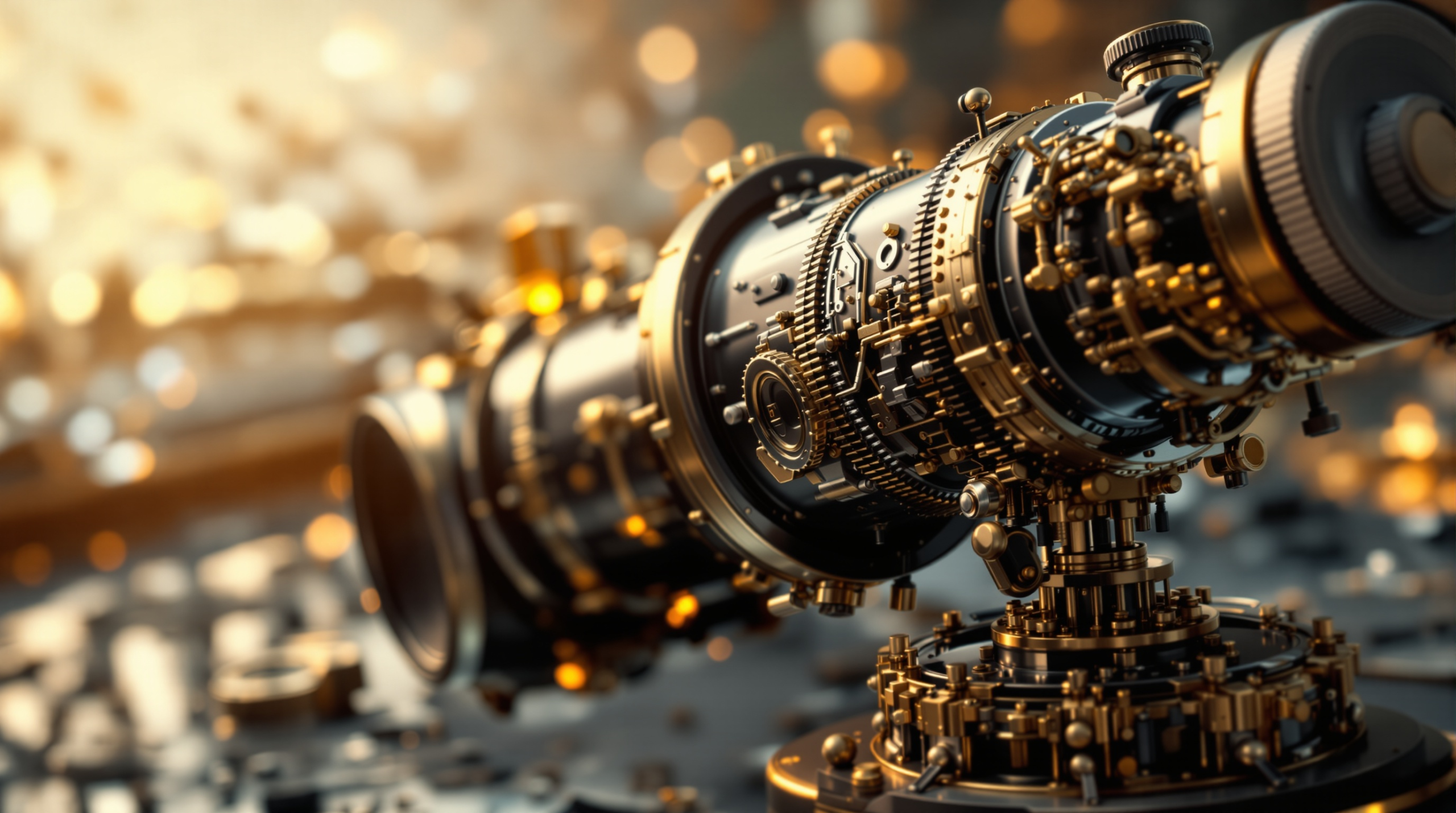
You’ve probably looked through a telescope at some point and wondered about its origins. Maybe you’ve even used one of those sleek reflector models at school or in someone’s backyard. But who actually came up with the idea of using mirrors instead of lenses to peek at the stars? The answer might surprise you, because the story involves genius, controversy, and a bit of scientific drama that still echoes through astronomy circles today.
The Birth of a Revolutionary Idea
Sir Isaac Newton is credited with inventing the reflecting telescope in 1668, though he actually built it a few years earlier around 1666 during his miraculous year at home while Cambridge University was closed due to the plague. Talk about making the most of lockdown time, right? Newton wasn’t just tinkering for fun. He was solving a serious problem that plagued every telescope of his era.
The telescopes that existed before Newton’s invention were all refracting telescopes, which used glass lenses to magnify distant objects. These had a nasty issue called chromatic aberration, where colors would separate and create fuzzy, rainbow-edged images around everything you looked at. Imagine trying to study Jupiter’s moons when they’re surrounded by colorful halos. Frustrating doesn’t even begin to cover it.
Newton realized that mirrors didn’t suffer from this color-splitting problem because they reflected light rather than bending it through glass. His solution was elegant: use a curved primary mirror to collect and focus light, then bounce it to a smaller flat secondary mirror that would direct the image to an eyepiece mounted on the side of the tube. This design, now called the Newtonian reflector, became one of the most popular telescope designs in history.
But Wait, There’s a Twist in the Tale
Here’s where things get interesting. While Newton gets the credit for building the first practical reflecting telescope, he wasn’t actually the first person to think of the idea. A Scottish mathematician named James Gregory published a design for a reflecting telescope in 1663, about three years before Newton made his prototype. Gregory’s design was actually more sophisticated in some ways, using two curved mirrors instead of Newton’s combination of curved and flat.
So why doesn’t Gregory get more recognition? Simple: he couldn’t actually build one. The mirror-making technology of the time wasn’t advanced enough to create the precise parabolic shapes his design required. Gregory tried, but the craftsmen he worked with couldn’t grind mirrors to the necessary specifications. It’s like having the blueprint for a smartphone in 1950 but no microchips to make it real.
Newton succeeded where Gregory failed partly because his design was simpler to manufacture, but also because Newton was extraordinarily hands-on. He didn’t just draw diagrams and hand them off to craftsmen. He personally ground and polished his own mirrors using a special alloy of copper and tin called speculum metal that he formulated himself. His first telescope was tiny by today’s standards, with a primary mirror just 3.3 centimeters across, but it could magnify objects about 40 times.
The Performance That Changed Everything
When Newton demonstrated his little telescope to the Royal Society in 1671, it caused quite a stir. Despite being only about 15 centimeters long, it performed as well as refracting telescopes that were several feet in length. Think about that for a moment. You could achieve the same magnification with a device you could hold in one hand that previously required a telescope so long you needed a ladder to use it.
The Royal Society was so impressed they immediately elected Newton as a fellow. This wasn’t just a pat on the back either. It launched Newton into the scientific spotlight and gave him the platform that would eventually lead to his groundbreaking work on gravity and motion. Sometimes one invention really can change the trajectory of someone’s entire career.
Why Mirrors Beat Lenses for Big Telescopes
You might wonder why reflecting telescopes became so dominant in astronomy if refracting telescopes existed first. The answer comes down to physics and practicality. When you want to build a really powerful telescope, you need a large surface area to collect as much light as possible from faint, distant objects.
With a lens, you can only support it around the edges, and glass is heavy. Make a lens too big, and it sags under its own weight, distorting your image. The largest practical refracting telescope ever built has a lens about one meter across, and it took decades to figure out how to support it properly. But a mirror can be supported from behind across its entire back surface, which means you can make them much, much larger without them warping.
Today’s biggest optical telescopes all use mirrors. The Gran Telescopio Canarias in Spain has a primary mirror 10.4 meters across, made up of 36 hexagonal segments working together. Try building a lens that size and you’d end up with an expensive pile of broken glass. Newton’s basic principle of using reflection instead of refraction enabled these astronomical giants that peer billions of light-years into space.
The French Connection You Probably Haven’t Heard About
There’s another name that occasionally pops up in discussions about who invented the reflecting telescope: Laurent Cassegrain, a French Catholic priest. In 1672, just a year after Newton presented his telescope to the Royal Society, Cassegrain published a design that placed the eyepiece at the back of the telescope, behind the primary mirror. This Cassegrain design is actually more common in modern telescopes than Newton’s original layout, especially for larger instruments.
The timing sparked some debate about whether Cassegrain developed his idea independently or was inspired by Newton’s work. We’ll probably never know for sure, but the Cassegrain arrangement has some real advantages. By sending the light back through a hole in the primary mirror, you get a much longer effective focal length in a shorter tube. It’s like folding the optical path back on itself, making the whole telescope more compact and easier to mount.
Modern variations like the Schmidt-Cassegrain and Ritchey-Chrétien telescopes (the Hubble Space Telescope uses this design) are all descendants of Cassegrain’s clever modification to the basic reflecting telescope concept.
What Made Newton’s Achievement So Remarkable
When you look at the full context, Newton’s accomplishment becomes even more impressive. Remember, this was the 1660s. There was no precision machinery, no standardized manufacturing, no YouTube tutorials on mirror grinding. Newton was working in a world where scientific instrument making was still more art than science.
He had to figure out everything from scratch: what metal alloy would reflect best, how to grind a parabolic curve accurate to within fractions of a millimeter, how to polish the surface to near-perfect smoothness. The fact that his telescope worked at all was remarkable. The fact that it worked well enough to impress the most prestigious scientific body in England was extraordinary.
Newton’s reflecting telescope was about solving problems and making things work with the materials and knowledge available. That’s what separates theoretical designs from practical inventions. Gregory had the idea first, but Newton made it real.
The Legacy That Keeps on Giving
Walk into any amateur astronomy club meeting today, and you’ll see Newton’s legacy everywhere. Backyard astronomers still build and use Newtonian reflectors, often grinding their own mirrors just like Newton did over 350 years ago. It’s one of the most accessible ways to get into serious stargazing because the design is relatively simple and mirrors are cheaper to produce than large, high-quality lenses.
Professional astronomy owes even more to Newton’s breakthrough. Every major observatory on Earth and most space telescopes use reflecting designs. When the James Webb Space Telescope unfolds its massive 6.5-meter segmented mirror in space, it’s using principles that trace directly back to Newton’s insight about reflection versus refraction.
The reflecting telescope also demonstrates something important about how science progresses. Good ideas often come from multiple people around the same time (like Gregory and Newton), but making those ideas work in practice requires a different kind of genius. Newton combined theoretical understanding with practical skill, and that combination changed astronomy forever.
So Who Really Invented It?
If you want the simple answer: Isaac Newton invented the first working reflecting telescope in 1668. If you want the complete answer, it’s a bit more nuanced. James Gregory conceived the idea first but couldn’t build one. Newton made it real with his own hands and his own innovations in mirror-making. Laurent Cassegrain improved the design shortly after. And countless other scientists and engineers have refined and expanded on these foundations ever since.
That’s how invention usually works, though. We like to imagine lone geniuses having eureka moments, but reality is usually messier and more collaborative across time. Newton stood on the shoulders of giants (his words, actually), and every astronomer since has stood on his.
The next time you look at the moon through a telescope or see images from a space observatory, take a moment to appreciate the chain of innovation that started with a young man grinding metal mirrors by hand during a plague year. From that small beginning flowed discoveries about distant galaxies, black holes, exoplanets, and the very structure of our universe. Not bad for a telescope you could fit in a shoebox.