Can You See Anything on the Moon with a Telescope?
I’ll never forget the first time I pointed my little 70mm telescope at the Moon. I was expecting maybe some fuzzy craters, but what I got was absolutely mind-blowing. The level of detail was incredible, and I remember thinking, “Wait, I can actually see mountains up there?” If you’re wondering whether you can see anything on the Moon with a telescope, I’m here to tell you that you’re in for a proper treat.
Can You See Anything on the Moon with a Telescope?
Yes, you absolutely can see stunning details on the Moon with a telescope, and you don’t need expensive equipment to get started. Even a modest telescope reveals thousands of craters, mountain ranges, valleys, and dark plains called maria. The Moon is actually the easiest celestial object to observe because it’s close (only 384,400 kilometres away) and incredibly bright, making it perfect for beginners and experienced observers alike.
What You’ll Actually See Through Your Telescope
The view through even a small telescope will blow away anything you’ve seen in photos taken with a smartphone. With a basic 60mm to 70mm refractor telescope, you’ll immediately notice the Moon isn’t the smooth, featureless ball it appears to be with your naked eye. Instead, you’ll see a complex, battered surface covered in countless impact craters.
The larger craters become obvious right away. Tycho, one of the Moon’s most prominent craters, appears as a bright spot in the southern highlands with spectacular rays extending outward like a cosmic splatter pattern. These rays are actually debris thrown out during the impact that created the crater about 108 million years ago. At 85 kilometres wide, Tycho looks stunning under the right lighting conditions.
You’ll also spot the maria, which are those dark patches visible even without any optical aid. Early astronomers thought these were actual seas (hence “maria,” Latin for seas), but they’re actually vast plains of ancient solidified lava. The largest, Mare Imbrium, spans about 1,100 kilometres and appears as a prominent dark area in the Moon’s northern hemisphere.
The Magic of the Terminator Line
Here’s something most beginners don’t realize at first: the absolute best time to observe the Moon isn’t during a full moon. Counterintuitive, right? The sweet spot is actually along the terminator line, which is the boundary between the lit and dark portions of the Moon’s surface.
Along this line, the sun hits the lunar surface at a low angle, creating dramatic shadows that make craters, mountains, and valleys stand out in incredible relief. It’s like the difference between looking at a flat photo versus a 3D model. During a full moon, the sun is directly overhead from our perspective, washing out all those beautiful shadows and making everything look flat and boring.
When you observe near the terminator, you might catch something remarkable: crater walls catching sunlight while their floors remain in deep shadow, creating spectacular contrast. Some mountain peaks even remain illuminated after sunset on the lunar surface, appearing as bright spots in the darkness beyond the terminator.
Telescope Size Matters (But Not As Much As You Think)
You don’t need a massive telescope to see impressive lunar details. A 70mm refractor or 4-inch reflector will reveal hundreds of craters and major features clearly. Bump up to a 6-inch telescope, and you’re looking at thousands of visible craters, along with subtle features like crater terraces, central peaks, and rilles (long, narrow depressions that look like dried-up riverbeds).
With an 8-inch or larger telescope, the Moon becomes almost overwhelming in detail. You’ll see tiny craterlets inside larger craters, fault lines, wrinkle ridges on the maria, and even boulder fields in some areas. The Apollo landing sites become theoretically detectable as slightly different textures, though you won’t see the actual hardware. Even the massive Hubble Space Telescope can’t resolve objects as small as the lunar modules, which are only about 4 metres wide.
Magnification is another factor worth understanding. A common mistake is cranking up the magnification as high as possible, thinking more is always better. In reality, the Moon looks fantastic at moderate magnifications of around 50x to 150x. Higher magnifications can work on nights with excellent atmospheric stability, but often they just magnify atmospheric turbulence, making the image shimmer and blur.
Specific Features You Can Spot Tonight
Let me walk you through some crowd-pleasers that never get old. Copernicus crater is a stunner at 93 kilometres wide with terraced walls and a prominent central peak. When it’s near the terminator, the shadows inside are so deep it looks like you could fall right in.
The Apennine Mountains form part of the ring around Mare Imbrium and include peaks reaching heights of 5,000 metres. Seeing actual mountains on another world through your own telescope hits differently than looking at photos online. There’s something visceral about it.
Vallis Alpes, or the Alpine Valley, cuts straight through the lunar Alps and is visible in a 4-inch telescope as a distinctive gash in the mountain range. It’s about 180 kilometres long and was likely formed by a combination of volcanic and impact processes. With larger telescopes under good conditions, you can even spot a narrow rille running down the valley’s centre.
If you’re observing during a lunar sunrise or sunset (from the Moon’s perspective), watch for the Straight Wall or Rupes Recta. This fault scarp appears as a dramatic dark line before lunar noon, then reverses to appear as a bright line after noon. It’s about 110 kilometres long and rises roughly 300 metres above the surrounding terrain.
Color on the Moon (Yes, Really)
Most people assume the Moon is grey and boring color-wise, but patient observers with decent telescopes can detect subtle color variations. The maria appear slightly darker and more brownish compared to the brighter, cream-colored highlands. Some impact craters show bluish hues, while others have orange or tan tints related to their composition and age.
Using a moon filter can actually enhance these subtle colors and reduce glare from the Moon’s brightness. The Moon can be genuinely uncomfortable to observe during fuller phases without a filter, as its brightness can cause eye strain. A simple neutral density moon filter screws onto your eyepiece and makes extended viewing sessions much more pleasant. If you want to know more about which moon filter to buy, check this article.
When Atmospheric Conditions Work For or Against You
You know those nights when stars are twinkling like crazy? That’s bad news for lunar observing. That twinkling, called atmospheric seeing, is caused by turbulent air masses between you and space. On nights with poor seeing, the Moon’s edge appears to shimmer and boil, and fine details become impossible to resolve.
The best lunar observing happens on nights with stable air masses. Interestingly, slightly hazy nights can sometimes provide better seeing than crystal-clear nights, because high-altitude haze doesn’t affect image steadiness the same way turbulent air does. Cold winter nights often provide excellent seeing conditions, though you’ll need to bundle up.
Time of night matters too. Observing when the Moon is high in the sky means you’re looking through less atmosphere than when it’s near the horizon. That translates directly to sharper, steadier views with better contrast and detail.
Advanced Observing: Transient Lunar Phenomena
Here’s where things get really interesting. Some observers have reported brief, localized changes in appearance on the lunar surface called Transient Lunar Phenomena or TLPs. These include temporary brightenings, reddish glows, or obscurations of surface details, typically lasting minutes to hours.
While controversial and difficult to verify, some scientists think these events might be caused by outgassing from beneath the lunar surface or static electricity effects. The crater Aristarchus is a hotspot for reported TLPs. Whether you believe in them or not, systematically observing specific areas over time trains your eye and helps you notice subtle details you’d otherwise miss.
Getting Started Without Breaking the Bank
If you’re just dipping your toes into lunar observation, you can start with binoculars. A decent pair of 10×50 binoculars will show you the major maria, larger craters like Tycho and Copernicus, and the general terrain differences between highlands and lowlands. Mount them on a tripod for steady viewing, and you’ve got a surprisingly capable lunar observing setup.
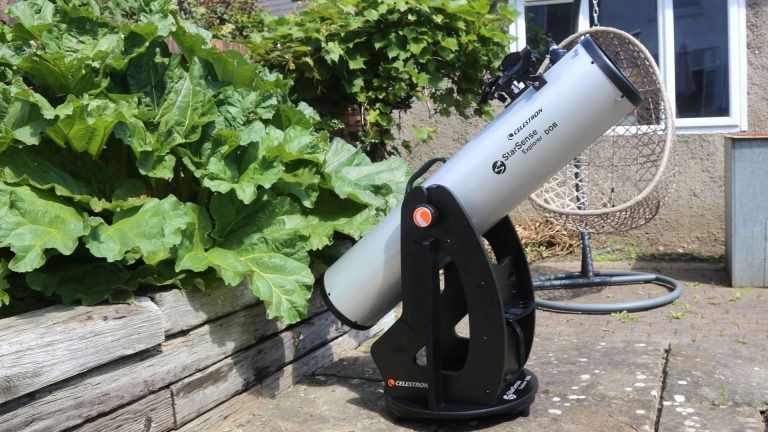
When you’re ready for a telescope, a 70mm refractor or 4.5-inch reflector in the $150-$500 range provides excellent lunar views. Don’t obsess over getting the perfect telescope right away. The best telescope is the one you’ll actually use, and smaller scopes are more likely to get pulled out regularly than massive ones that require a production to set up.
Download a lunar map app or print out a detailed Moon map to identify what you’re seeing. Nothing beats the satisfaction of matching features in your eyepiece to their names and learning the Moon’s geography. Apps like “Moon Globe” or websites with interactive lunar atlases help you plan observing sessions around specific features near the terminator.
If you’re interested, here’s a review of our top telescope picks for under $500.
Why Lunar Observing Never Gets Old
Even after hundreds of observing sessions, the Moon continues to surprise me. The lighting changes every night, revealing different features and creating new shadows and highlights. What looks dramatic one night might be barely visible a week later, and that constant variety keeps things fresh.
There’s also something deeply satisfying about observing a world that humans have actually walked on. When you’re looking at Mare Tranquillitatis, you’re seeing the region where Neil Armstrong and Buzz Aldrin landed. The footprints they left are still there, preserved in the airless environment, though far too small for any Earth-based telescope to resolve.
The Moon represents your most accessible and forgiving target for learning telescope skills. Unlike planets, which appear tiny and require perfect tracking and focus, or deep-sky objects that need dark skies and patience, the Moon is huge, bright, and packed with detail. It’s available roughly half the month and visible even from light-polluted cities.
So yes, you can absolutely see incredible things on the Moon with a telescope. From ancient impact craters to towering mountain ranges, from volcanic plains to mysterious rilles, our nearest neighbour offers a lifetime of observing pleasure. The view that awaits you is so much better than you’re probably imagining, and that first glimpse will likely hook you on astronomy for good. Clear skies!