Can A Telescope See Planets?
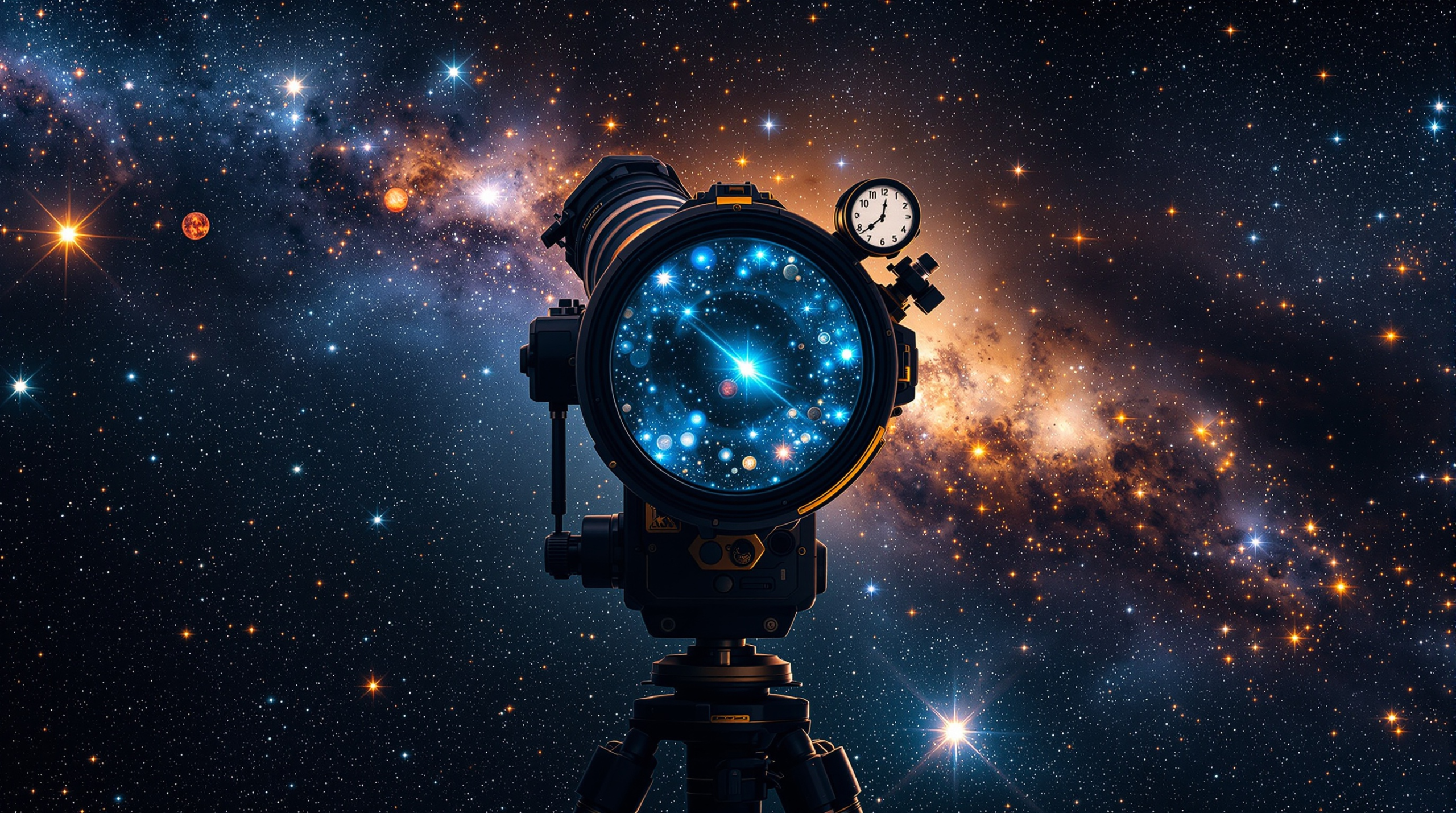
Picture this: you’ve just unboxed your first telescope, set it up in your backyard, and now you’re wondering if you can actually spot Jupiter or Mars up there in the night sky. The short answer? Absolutely, and you’re about to discover just how incredible the view can be.
Can a Telescope See Planets? Your Guide to Planetary Viewing
Let’s get straight to it: yes, telescopes can see planets, and you don’t need a massive observatory or a PhD to do it. Even a modest telescope will reveal details that’ll make you feel like a cosmic explorer. I remember the first time I pointed my telescope at Saturn and saw those rings with my own eyes. No photograph prepared me for that moment, and honestly, it still gives me goosebumps.
The real question isn’t whether you can see planets, but what you’ll actually see when you point your telescope skyward. That answer depends on your equipment, the planet you’re observing, and what you’re hoping to discover.
What You’ll Actually See Through Your Telescope
Here’s where we need to manage expectations a bit. When you look at planets through a telescope, you won’t see the stunning, colour-saturated images from NASA. Those are taken with spacecraft and advanced imaging equipment. What you will see, though, is something far more special: real-time views of worlds millions of kilometres away.
Venus appears as a brilliant crescent or gibbous phase, much like our Moon. It’s the third-brightest object in our sky after the Sun and Moon, making it incredibly easy to locate. Through even a small 60mm telescope, you’ll notice its phases changing over weeks and months. Interestingly, Venus rotates so slowly that one day on Venus lasts 243 Earth days, longer than its 225-day year.
Mars shows up as a rusty orange disc. With a decent 150mm telescope during a close approach, you might spot the polar ice caps and dark surface features. The planet’s atmosphere, though thin at just 1% of Earth’s atmospheric pressure, occasionally produces dust storms large enough to see from our planet.
The Show-Stoppers: Jupiter and Saturn
If planets were a band, Jupiter and Saturn would be the lead singers. They’re the ones that make people gasp when they first see them.
Jupiter reveals its cloud bands through telescopes as small as 70mm. You’ll see the distinct stripes across its atmosphere, and if you watch for just an hour or two, you can actually see its four largest moons, the Galilean satellites, changing position. These moons orbit so quickly that their arrangement looks different each night. Jupiter’s Great Red Spot, a storm system larger than Earth that’s been raging for at least 350 years, appears as a pale oval feature in amateur telescopes.
Saturn is the crowd favourite, and for good reason. Those rings are visible even in a small 60mm refractor, though they’ll look more like handles attached to the planet. Bump up to a 200mm telescope, and you’ll start seeing the Cassini Division, a gap in the rings discovered in 1675. The rings themselves are incredibly thin, just 10 metres (33 feet) thick in some places despite spanning 282,000 kilometres.
When Saturn Disappears (Sort Of)
Here’s something that catches new observers off guard: Saturn’s rings aren’t always visible. Every 13 to 15 years, we see them edge-on from Earth, and they virtually disappear because they’re so thin. If you’re observing during these periods, Saturn looks oddly naked without its signature feature.
The Outer Worlds: Uranus and Neptune
Can you see Uranus and Neptune with a telescope? Yes, but temper those expectations. Uranus appears as a tiny blue-green disc in medium-sized telescopes (200mm or larger). Neptune looks even smaller and requires at least a 250mm telescope to show as more than a star-like point. These ice giants orbit so far out that sunlight reaching them is incredibly dim.
Uranus has the distinction of rotating on its side with an axial tilt of 98 degrees, likely from an ancient collision. This means its poles experience 42 years of continuous sunlight followed by 42 years of darkness. Through a telescope, though, you’ll mainly just appreciate that you’re looking at a planet nearly 3 billion kilometres away.
Mercury: The Elusive Speedster
Mercury is technically visible through telescopes, but it’s notoriously difficult to observe. It never strays far from the Sun in our sky, so you’re usually looking at it through thick atmospheric haze near the horizon during twilight. When you do catch it, expect to see phases similar to Venus but on a much smaller scale. Surface temperatures swing wildly from 430°C (800°F) during the day to -180°C (-290°F) at night, the most extreme temperature range in our solar system.
What Size Telescope Do You Actually Need?
This is where practical advice matters. You can start planetary observation with almost any telescope, but let’s talk about what different apertures reveal.
A 60-70mm refractor or small spotting scope shows lunar craters beautifully and reveals Saturn’s rings as distinct from the planet. You’ll see Jupiter’s bands and its four major moons. This is entry-level but genuinely satisfying.
Moving up to a 100-130mm telescope brings significantly more detail. Jupiter’s bands show more structure, Saturn’s Cassini Division becomes visible, and Mars reveals surface features during favourable oppositions. This size range offers the best balance of portability, cost, and performance for most amateur astronomers.
At 200mm and beyond, you’re entering serious planetary observation territory. You’ll track storms on Jupiter, see multiple divisions in Saturn’s rings, and observe fine detail on Mars. These larger instruments gather enough light to benefit from higher magnifications, typically 300x or more on steady nights.
Magnification Myths
Here’s something the telescope marketing departments won’t tell you: magnification isn’t everything. A telescope’s aperture, the diameter of its main lens or mirror, determines how much detail you can theoretically see. There’s a practical limit of about 50x per inch of aperture (or 2x per millimetre) under excellent conditions. Push beyond that, and you’re just magnifying blur.
I’ve seen people disappointed with a 60mm telescope advertised as “525x power!” When they use that maximum magnification, everything looks dark and fuzzy. A 60mm telescope realistically maxes out around 120-140x on a good night.
Seeing Conditions: Why Some Nights Disappoint
Ever wondered why professional observatories get built on remote mountaintops? They’re chasing good seeing conditions, the astronomer’s term for atmospheric stability.
Turbulence in Earth’s atmosphere makes planets shimmer and blur, sometimes so badly that you can’t use high magnification at all. Temperature differences, jet streams, and even heat radiating from buildings affect what you see. Coastal observers often enjoy better seeing than those inland because large bodies of water stabilize atmospheric conditions.
The best planetary views often come after midnight when atmospheric turbulence settles down. Counterintuitively, slightly hazy nights sometimes provide better seeing than crystal-clear evenings because high-altitude haze can dampen turbulence.
Beyond Visual Observation: Modern Planetary Imaging
Today’s amateur astronomers capture planetary details that rival professional observatories from just decades ago. Planetary cameras and video capture techniques let you record thousands of frames, then stack the sharpest ones using free software. This approach averages out atmospheric distortion and reveals incredible detail.
You don’t need expensive equipment to start. Some observers achieve impressive results using modified webcams. The key is capturing video when seeing conditions are good, then letting software do the heavy lifting.
When Planets Look Their Best
Planetary viewing follows predictable cycles. Mars comes closest to Earth roughly every 26 months during events called oppositions. Some oppositions are better than others because Mars has an elliptical orbit. The exceptional opposition in 2003 brought Mars within 56 million kilometres, the closest in 60,000 years. During favourable oppositions, even modest telescopes reveal striking surface detail.
Jupiter and Saturn reach opposition annually, spending several months in prime viewing position. During opposition, these planets rise at sunset, reach their highest point around midnight, and set at sunrise. They’re also closest to Earth during these periods, appearing largest and brightest.
Venus never reaches opposition because it orbits inside Earth’s path, but it goes through periods of greatest elongation when it appears farthest from the Sun in our sky. These are your best chances for detailed observation.
The Moon: Your Training Ground
Before you chase planets, spend time with the Moon. It’s the best teacher for learning your equipment, testing different magnifications, and understanding how atmospheric conditions affect your views. The terminator, the line between lunar day and night, reveals stunning crater detail in almost any telescope.
The Moon also helps you develop the observational skills needed for planetary work. You’ll learn to recognize when seeing conditions are good, how to achieve sharp focus, and how to let your eye adapt to what you’re observing. These skills translate directly to planetary observation.
Starting Your Planetary Journey
So can a telescope see planets? Not only can it see them, but it can show you details that’ll fundamentally change how you think about our solar system. You’ll watch Jupiter’s moons dance around their giant host, see Saturn’s rings open and close over years, and maybe even spot a dust storm on Mars.
The equipment matters less than you might think. I’ve shared telescope views with hundreds of people over the years, and whether we’re using a basic 80mm refractor or a sophisticated 300mm reflector, the reaction is always the same: genuine wonder at seeing another world with their own eyes.
Start with whatever telescope you can access, learn the night sky, and give yourself time to develop observational skills. Point your telescope at Jupiter tonight if it’s visible, and you’ll understand why Galileo’s observations in 1610 revolutionized our understanding of the cosmos. Those same moons are still there, still orbiting, still waiting for you to discover them yourself.
The planets aren’t going anywhere. They’ll be there whenever you’re ready to look up and explore. All you need is clear skies, a telescope, and the curiosity to see what lies beyond our world.