Are Telescope Lenses Universal?
I’ll never forget the first time I tried swapping eyepieces between my refractor and my friend’s reflector. I was so excited to try his fancy wide-field lens, only to discover it wouldn’t even thread onto my telescope. Talk about a reality check. If you’re wondering whether telescope lenses are universal, you’re asking the right question before making an expensive mistake.
The Short Answer: No, Telescope Lenses Aren’t Universal (But There’s More to the Story)
Here’s the deal: telescope eyepieces (what most people call “lenses”) aren’t one-size-fits-all. Think of it like trying to use an iPhone charger on an Android phone. Sure, they both charge devices, but the connections don’t match up without an adapter.
The astronomy world has settled on a few standard barrel sizes that most modern telescopes use, which gives us some compatibility. However, the “universality” stops there. Your eyepiece diameter needs to match your telescope’s focuser size, and even then, not every combination will give you the viewing experience you’re hoping for.
Understanding Eyepiece Barrel Sizes: The Foundation of Compatibility
Most telescopes today accept eyepieces with barrel diameters of either 1.25 inches or 2 inches. Some smaller telescopes, particularly older models or budget options, use a less common 0.965-inch barrel. If you’ve got one of those, you’re dealing with a format that’s largely been phased out since the 1990s, though adapters can help bridge the gap.
The 1.25-inch format became the industry standard because it balances affordability with decent light-gathering capability. Meanwhile, 2-inch eyepieces offer wider fields of view and are particularly brilliant for deep-sky observing, where you want to capture sprawling nebulae or star clusters in one glance. Many mid-range to high-end telescopes now come with dual-speed focusers that accept both sizes using an adapter sleeve.
Why Size Matching Matters More Than You Think
Here’s something that surprised me when I was starting out: you can’t just jam a 2-inch eyepiece into a 1.25-inch focuser, no matter how much you want that extra field of view. The physical barrel needs to slide smoothly into your telescope’s focuser and lock securely with either a thumbscrew or compression ring mechanism.
Using the wrong size isn’t just ineffective; it can actually damage your equipment. I’ve seen compression rings on focusers get stripped because someone forced a mismatched eyepiece into place. Not a fun repair bill, trust me.
Beyond Barrel Size: When “Compatible” Doesn’t Mean “Optimal”
Let’s say you’ve got the barrel size right. You’re not out of the woods yet. Your telescope’s focal length and focal ratio play huge roles in determining which eyepieces will actually perform well.
Fast focal ratios (like f/4 or f/5) can cause edge distortion with certain eyepiece designs, particularly simple Kellner or Plossl types. Meanwhile, a long focal length telescope paired with a high-power eyepiece might magnify the image so much that it becomes dim and shaky from atmospheric turbulence. Have you ever tried to read text that’s been zoomed in too far on your computer? Same frustrating experience.
The Exit Pupil Factor Nobody Talks About
Here’s an insider detail that often gets overlooked: exit pupil matching matters more than magnification alone. The exit pupil is the beam of light that exits the eyepiece and enters your eye. You calculate it by dividing the eyepiece focal length by your telescope’s focal ratio.
Your eye’s pupil dilates to about 7mm in darkness when you’re young, shrinking to around 5mm as you age. If your telescope’s exit pupil is larger than your eye’s pupil can accommodate, you’re literally wasting light. Conversely, extremely small exit pupils (under 0.5mm) become uncomfortable to use because your eye must be positioned perfectly to see anything.
Refractors, Reflectors, and Catadioptrics: Each Plays by Different Rules
Different telescope designs have quirks that affect eyepiece performance. Refractor telescopes generally play nicely with most eyepiece designs because their optical path is straightforward. Light travels through the objective lens and straight to your eyepiece without obstruction.
Newtonian reflectors have that secondary mirror creating a small central obstruction, which can affect contrast slightly. More importantly, fast Newtonians (f/5 or faster) suffer from an aberration called coma that makes stars look like little comets near the edge of the field. Standard eyepieces won’t correct this, but specialized coma correctors or eyepieces with built-in correction can help.
Schmidt-Cassegrain and Maksutov-Cassegrain telescopes fold their light path, creating a much longer effective focal length in a compact tube. This design is forgiving with eyepiece choices, though some Schmidt-Cassegrains can produce curved fields that make achieving sharp focus across the entire view challenging with certain eyepiece types.
Filter Threads: Another Layer of Compatibility
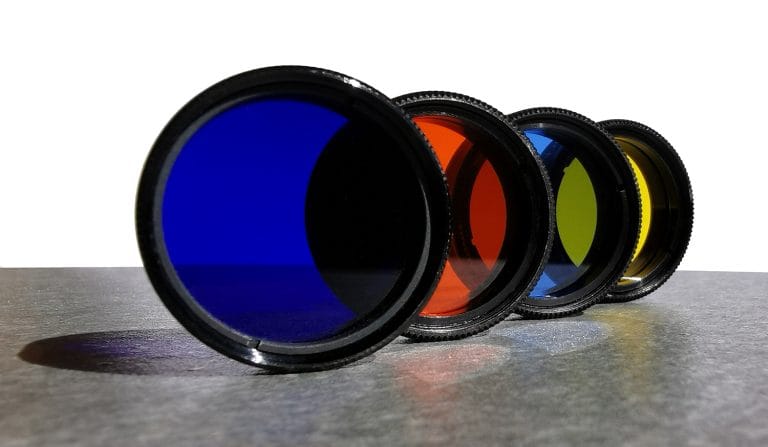
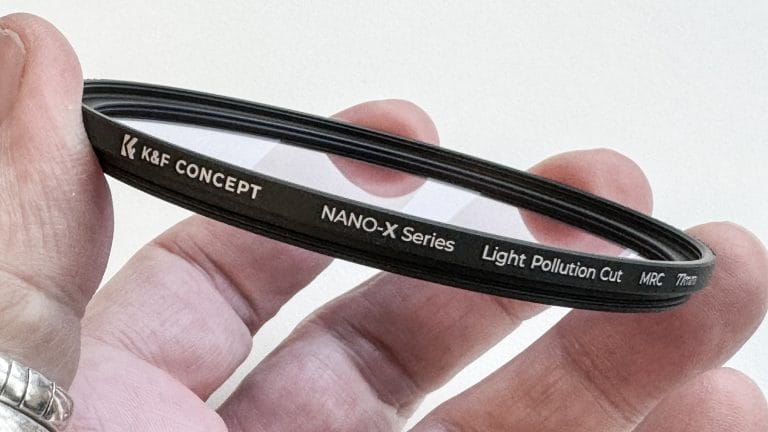
Most quality eyepieces include filter threads on the barrel’s bottom. These standard threads (usually 1.25-inch threading for 1.25-inch eyepieces, 2-inch threading for 2-inch eyepieces) let you screw in filters for planetary observation or light pollution reduction.
But here’s a gotcha: not all budget eyepieces include these threads. I learned this the hard way when I bought a cheap moon filter that had nowhere to attach on my starter eyepiece. The threads are standardized when present, which is genuinely helpful, but you need to verify your eyepiece actually has them.
Binocular Viewers and Specialty Attachments Change Everything
If you’re considering a binocular viewer (using both eyes simultaneously), compatibility becomes even more complex. These attachments require additional back focus distance that not all telescopes can provide. Refractors and Schmidt-Cassegrains usually handle them well, but many Newtonian reflectors can’t achieve focus with a binocular viewer attached without modification.
Camera adapters present similar challenges. Using your telescope for astrophotography requires precise spacing between the optical elements and your camera sensor. An eyepiece designed for visual use won’t simply convert into a photography solution just because the barrels match.
The Adapter Solution: Bridge Builder or Band-Aid?
Telescope adapters can convert between barrel sizes, letting you use a 1.25-inch eyepiece in a 2-inch focuser, for instance. These work mechanically, but there’s a catch worth considering.
Adapters don’t add functionality; they just make things physically fit. You won’t gain the wider field of view that a true 2-inch eyepiece provides by adapting a 1.25-inch eyepiece into a 2-inch focuser. You’re still limited by the smaller barrel’s field stop diameter. Think of it like watching a regular TV show on your big-screen TV. The screen is bigger, but the picture isn’t really using all that space.
That said, adapters are genuinely useful for protecting your investment. If you upgrade to a telescope with a 2-inch focuser, adapters let you keep using your existing 1.25-inch eyepiece collection while you gradually add larger pieces.
Brand Compatibility: Does It Matter?
Unlike camera lenses where brand-specific mounts lock you into an ecosystem, telescope eyepieces from different manufacturers generally work together fine as long as the barrel sizes match. A Celestron eyepiece works perfectly in an Orion telescope, and a TeleVue eyepiece performs beautifully in a Sky-Watcher scope.
The standardization of barrel sizes in the 1980s and 1990s was one of the best things to happen to amateur astronomy. Before that, manufacturers used proprietary sizes that forced you to stick with one brand. We’re fortunate that drama is mostly behind us.
Making Smart Buying Decisions
When you’re eyeing a new eyepiece, check your telescope’s specifications first. You need to know your focuser size, your telescope’s focal length, and ideally its focal ratio. These numbers tell you what will physically fit and what will perform well.
For planetary viewing, you generally want shorter focal length eyepieces (4mm to 10mm range) that deliver higher magnification, assuming your telescope’s aperture can handle it. A useful rule of thumb: your maximum practical magnification is roughly 50 times your aperture in inches, or 2 times your aperture in millimeters. Push beyond that and you’re just magnifying blur and atmospheric distortion.
For deep-sky objects like galaxies and nebulae, longer focal length eyepieces (20mm to 40mm) with wider apparent fields of view create that immersive experience we’re all chasing. These require 2-inch barrels to achieve their full potential, which brings us back to that focuser compatibility question.
The Bottom Line: Universal Enough, With Important Limits
So are telescope lenses universal? They’re universal within their size standards and generally cross-compatible between brands, which is honestly pretty great. But they’re not universal across all telescopes or all applications.
Your job is matching the right eyepiece to your specific telescope and observing goals. That 1.25-inch barrel standard gives you tremendous flexibility, and stepping up to 2-inch eyepieces opens even more possibilities if your focuser supports them. Just remember that physical compatibility doesn’t automatically equal optimal performance.
Start with understanding your telescope’s specifications, then build your eyepiece collection thoughtfully around what you actually want to observe. Do that, and you’ll avoid the frustration I felt that first night when I couldn’t even attach my friend’s eyepiece. Clear skies out there, and may all your eyepieces thread on smoothly.