Are Telescope Eyepieces Interchangeable?
You’ve just bought your first telescope, or maybe you’re eyeing an upgrade, and suddenly you’re staring at a wall of eyepieces online. Different brands, different prices, different specifications. The big question hits you: are telescope eyepieces interchangeable? Can you mix and match, or are you locked into one brand forever?
Here’s the good news: telescope eyepieces are largely interchangeable, but there’s a catch. Actually, there are several catches. Let me walk you through what actually matters when swapping eyepieces between telescopes.
Understanding Barrel Size: The Universal Language of Eyepieces
The most important factor in eyepiece compatibility is the barrel diameter. Think of it like USB ports on your computer. Just as USB-C won’t fit a USB-A slot, your eyepiece barrel needs to match your telescope’s focuser.
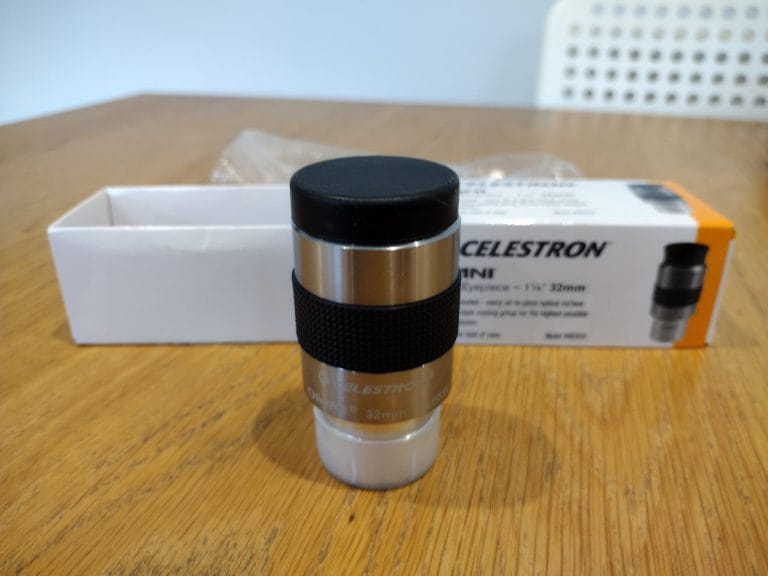
Modern telescopes use three standard barrel sizes: 1.25 inches (31.7mm), 2 inches (50.8mm), and the less common 0.965 inches (24.5mm). The 1.25-inch size is the workhorse of amateur astronomy. You’ll find it on most beginner to intermediate telescopes, and it handles everything from planetary viewing to deep-sky observing reasonably well.
The 2-inch eyepieces are the luxury option. They provide wider fields of view, which is brilliant for sweeping views of the Milky Way or large nebulae. However, they’re heavier and more expensive. Many mid-range and premium telescopes come with focusers that accept both sizes using an adapter sleeve.
That oddball 0.965-inch size? It’s mostly found on older or very cheap telescopes. If your telescope uses this size, you’re dealing with a limited selection of eyepieces, and honestly, it might be worth considering a telescope upgrade instead of investing in eyepieces for this format.
Will Any Brand Work With Your Telescope?
Yes, and that’s the beautiful part. A Celestron telescope happily accepts Televue eyepieces. Your Orion scope works perfectly with Baader eyepieces. As long as the barrel diameter matches, you’re golden.
This cross-compatibility is one of astronomy’s best-kept secrets for beginners. You don’t need to stick with the manufacturer who made your telescope. In fact, many telescope companies don’t even make their own eyepieces. They rebrand them from third-party manufacturers.
I remember chatting with someone at a star party who was convinced they could only use the eyepieces that came with their telescope. They’d been missing out on vastly superior optics for years. Once they tried a quality wide-angle eyepiece from a different brand, it was like seeing the sky for the first time.
The Focal Length Factor: Choosing the Right Magnification
While eyepieces are mechanically interchangeable, choosing the right focal length for your telescope matters enormously. Your magnification comes from dividing your telescope’s focal length by the eyepiece focal length. A 25mm eyepiece on a telescope with 1000mm focal length gives you 40x magnification (1000÷25=40).
Here’s where things get interesting: the same eyepiece produces different magnifications on different telescopes. That 10mm eyepiece giving you 100x on one scope might deliver 150x on another. This isn’t a compatibility issue, but it affects which eyepieces you should buy for your specific setup.
Most telescopes perform best between 50x and 200x for general observing. Push beyond your telescope’s maximum useful magnification (roughly 50x per inch of aperture), and you’re just magnifying blur. A 4-inch telescope maxes out around 200x, no matter how short your eyepiece focal length.
Building Your Eyepiece Collection
You don’t need a dozen eyepieces. Three good ones beat ten mediocre ones every time. Start with a long focal length eyepiece (25-32mm) for low power wide views, a medium one (10-15mm) for general observing, and a short focal length (5-8mm) for planetary detail.
The eyepieces that came with your telescope work as placeholders, but budget eyepieces often have narrow apparent fields of view (around 50 degrees). It’s like looking through a straw. Upgrade to eyepieces with 65 to 82-degree apparent fields, and suddenly you’re looking through a picture window instead.
Special Cases: When Compatibility Gets Complicated
Most eyepiece swapping is straightforward, but some situations need extra attention. Refractor telescopes sometimes struggle to reach focus with certain eyepiece designs because of their longer optical paths. This is particularly true with some low-profile eyepieces or when using Barlow lenses.
Telescopes with fast focal ratios (f/5 or faster) can show optical aberrations with basic eyepiece designs. The edges of your view might look blurry or show distorted stars. Premium eyepieces with more lens elements correct for this, but they cost more. A simple Plossl eyepiece works fine on an f/8 telescope but might disappoint on an f/4 scope.
Some telescopes use proprietary focusers or attachment systems. Certain Schmidt-Cassegrain telescopes have visual backs with specific threading. Maksutov-Cassegrains sometimes have unique focuser designs. You might need an adapter, but these are usually inexpensive and readily available.
Binoculars and binocular viewers present another wrinkle. These require matched pairs of eyepieces and specific back-focus distances. You can’t just grab any eyepiece for these setups.
The Eye Relief Question You Didn’t Know to Ask
Here’s something many beginners overlook: eye relief. This is the distance between the eyepiece lens and your eye where you see the full field of view. If you wear glasses, you need at least 15-20mm of eye relief to see comfortably without removing them.
Short focal length eyepieces traditionally have short eye relief, which means you’re practically pressing your eyeball against the lens. Modern designs solve this with complex optical arrangements. It’s worth paying attention to, especially if you’re considering eyepieces shorter than 10mm.
Quality Differences: Why Price Varies So Wildly
You’ll find 25mm eyepieces ranging from £15 to £300. Are expensive eyepieces better? Usually, yes. But diminishing returns kick in hard above certain price points.
Premium eyepieces use better glass with specialized coatings to reduce reflections and increase light transmission. They have wider apparent fields of view and longer eye relief. The view edge-to-edge stays sharp instead of getting fuzzy around the periphery. They’re parfocal too, meaning you can switch between eyepieces without refocusing much.
But here’s the thing: a £60 eyepiece often gives you 90% of what a £300 eyepiece delivers. That last 10% matters to some people and not at all to others. Your telescope’s optical quality also sets an upper limit on what you’ll notice from eyepiece upgrades.
Adapters and Reducers: Expanding Your Options
Can’t fit that gorgeous 2-inch eyepiece into your 1.25-inch focuser? An adapter won’t help because you can’t stuff a larger barrel into a smaller hole. However, the reverse works perfectly. A 2-inch to 1.25-inch adapter lets you use smaller eyepieces in larger focusers.
Some telescopes come with dual-size focusers that include a removable adapter collar. Check what you have before buying eyepieces in a size your focuser won’t accept. It seems obvious, but I’ve watched people buy the wrong size at astronomy swap meets more times than I can count.
Filter threads are another compatibility consideration. Most 1.25-inch eyepieces have standard threading for filters, but some ultra-wide designs don’t. If you’re planning to use moon filters or nebula filters, verify thread compatibility.
Making Smart Purchasing Decisions
When you’re ready to expand beyond your stock eyepieces, buy based on your telescope’s characteristics and your observing interests. A wide-field eyepiece makes sense for Milky Way sweeps but offers less benefit on a long focal length telescope with a naturally narrow field.
Consider buying used eyepieces from astronomy forums or clubs. Eyepieces are tough and long-lasting. A well-cared-for 20-year-old eyepiece performs identically to a new one. You can save 40-50% buying pre-owned premium eyepieces rather than new budget ones.
Try before you buy whenever possible. Astronomy clubs and star parties are perfect for this. Ask fellow observers if you can peek through their eyepieces. Most astronomers love sharing views and gear opinions. You’ll quickly learn which designs suit your eyes and observing style.
The Bottom Line on Eyepiece Swapping
Telescope eyepieces are wonderfully interchangeable across brands and telescope types, provided you match the barrel diameter to your focuser. This gives you freedom to build a collection tailored to your needs rather than being locked into one manufacturer’s ecosystem.
Focus on getting the right focal lengths for your telescope and observing interests. Invest in quality where it matters, particularly for your most-used magnifications. Remember that your telescope’s optical quality and design characteristics influence which eyepieces work best, so research compatibility for fast focal ratios or special telescope types.
The standardization of eyepiece barrels is one of amateur astronomy’s great advantages. It means that eyepiece you buy today will serve you through multiple telescope upgrades over decades. That’s not just interchangeable—that’s investment-grade gear that grows with your skills and interests in this remarkable hobby.