Is a Refractor or Reflector Telescope Better?
You’ve finally decided to buy your first telescope, and now you’re staring at two very different designs wondering which one won’t end up collecting dust in your garage. Refractor telescopes use lenses to gather light, while reflector telescopes use mirrors, and honestly, both can show you incredible things if you pick the right one for your situation.
The truth is, there’s no universal winner here. Your best telescope depends on what you actually want to look at, how much you’re willing to spend, and whether you can handle a bit of maintenance. Let’s break down what really matters so you can make a choice you’ll feel good about six months from now.
How Each Telescope Actually Works
A refractor telescope works like a giant magnifying glass. Light enters through a big lens at the front (the objective lens), bends, and focuses to create an image you view through the eyepiece. It’s the classic telescope design that Galileo used, and the basic concept hasn’t changed much in 400 years because it works beautifully.
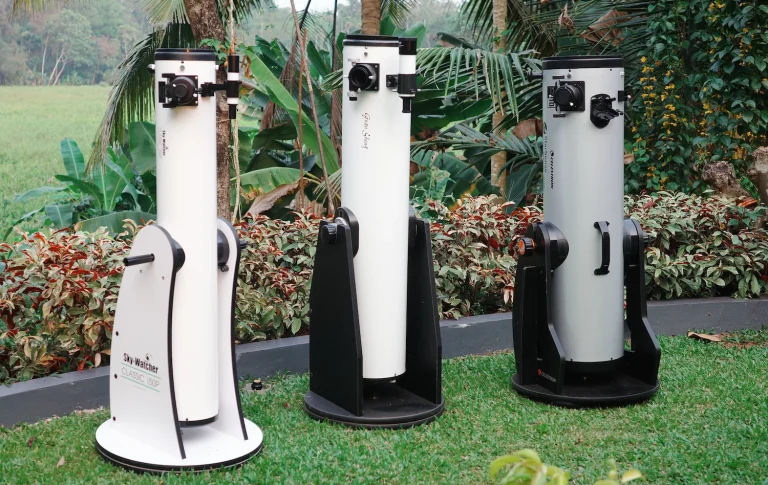
Reflector telescopes take a different approach. Light travels down the tube and hits a curved mirror at the bottom, which bounces it back up to a smaller secondary mirror that redirects it to your eyepiece on the side of the tube. Isaac Newton invented this design because large lenses were expensive and difficult to make, and that’s still true today.
The physics matter because they create real differences in what you’ll see and how much you’ll pay. A refractor giving you sharp views might cost three times what a reflector of similar quality costs, but that reflector needs adjustments that the refractor doesn’t.
Image Quality: Where the Rubber Meets the Road
Here’s where things get interesting. Refractors produce incredibly sharp, high-contrast images that make planetary viewing absolutely stunning. When you look at Saturn through a quality refractor, the contrast between the rings and the black space behind them is jaw-dropping. There’s a reason astrophotographers love using refractors for the moon and planets.
The catch? Cheaper refractors suffer from something called chromatic aberration, where you see colour fringes around bright objects (usually purple or yellow halos). It’s like looking through a poorly made window. To fix this, manufacturers create apochromatic refractors (APO refractors) with multiple lens elements made from special glass, and these can cost you several thousand dollars.
Reflectors don’t have chromatic aberration problems because mirrors reflect all colours equally. You get true colour rendition without breaking the bank. However, they can suffer from other optical issues like coma, which makes stars at the edge of your view look like little comets instead of pinpoints. Modern reflector designs minimize this, but it’s something to know about.
One fact many people don’t realize is that the central obstruction in a reflector (that secondary mirror blocking part of the incoming light) reduces contrast by about 10-20% compared to an unobstructed refractor of the same aperture. For deep-sky objects like nebulae, you won’t notice much. For planetary detail, it matters more than you’d think.
Low-Light Performance and Aperture
Want to see faint galaxies and nebulae? Aperture (the diameter of your main lens or mirror) is king, and reflectors dominate here. You can buy an 8-inch (200mm) reflector for around the same price as a 4-inch (100mm) refractor. Since light-gathering power increases with the square of the aperture, that 8-inch reflector gathers four times more light.
This is why amateur astronomers who love deep-sky objects almost always choose reflectors. That extra light-gathering power transforms dim smudges into objects with visible structure and detail. A refractor would need to be twice the diameter to compete, and good luck affording that.
Portability and Setup Reality Check
Let’s talk about something the marketing materials gloss over: actually using the thing. A 4-inch refractor weighs maybe 5 kg (11 pounds) and you can have it set up in two minutes. Just point and go. No alignment needed, no adjustments, just astronomy.
That 8-inch reflector we mentioned? It weighs around 18 kg (40 pounds) without the mount, and you’ll need to collimate (align the mirrors) periodically. It’s not rocket science, but it is another step between you and actually observing. I’ve seen plenty of people buy large reflectors with dreams of weekly stargazing sessions, only to leave them inside because setup feels like too much work on a Tuesday night.
Refractors win the convenience battle hands down. They hold their alignment better during transport because the lens is fixed at the front. Reflectors are more sensitive to bumps and vibrations, and you might need to recollimate after moving your telescope to a dark-sky site. Are you the type who’ll embrace this as part of the hobby, or will it become a barrier to actually using your telescope?
Maintenance: The Long Game
Here’s a difference that becomes more important the longer you own your telescope. Refractors are sealed tubes. Dust and moisture can’t get inside easily, and the lens coatings protect the glass. You might clean the exterior lens once or twice a year, and that’s about it. Some refractors still deliver perfect images after decades with essentially zero maintenance.
Reflectors are open tubes. Air flows through them, which means dust settles on your primary mirror. Every few years (or more frequently if you observe in dusty or humid locations), you’ll need to remove and clean the mirror. It’s not difficult, but you need to be careful because touching the mirror surface with anything except specialized materials can scratch the delicate coating.
The mirrors can also lose alignment over time. Temperature changes cause the tube to expand and contract slightly, and those tiny movements add up. Learning to collimate isn’t hard, but it’s definitely something you need to be comfortable doing. Think of it like checking your car’s tire pressure versus changing the oil yourself.
Temperature Matters More Than You Think
Both telescope types need time to reach thermal equilibrium with the outside air, but reflectors are pickier about this. Take a reflector from your 20°C (68°F) house into the 5°C (41°F) night air, and the temperature difference creates air currents inside the tube that make everything look wobbly and distorted. You might need to wait 30-60 minutes for good views.
Refractors cool down faster because they’re sealed and have less mass in the optical path. You can often start observing within 15 minutes. This might seem minor until you’re standing in the cold with excited kids who want to see something right now.
Here’s something interesting: reflectors with cooling fans can reach thermal equilibrium in half the normal time. Some serious amateurs swear by these modifications, especially for those living in areas with significant day-to-night temperature swings.
What Different Budgets Actually Buy You
Under $500, your best bet is usually a Dobsonian reflector, which is a reflector on a simple but effective mount. You can get a 6-inch or even 8-inch aperture that will show you thousands of deep-sky objects. The views will be genuinely impressive, but expect to do some maintenance and learning. If interested, our Dobsonian telescope top picks can be found here.
In this price range, refractors max out around 3 to 4 inches of aperture and will often have noticeable chromatic aberration on bright objects. They’re still great for the moon and planets, and the ease of use might be worth the optical trade-offs if you value convenience.
Between $500 and $1,500, quality refractors start appearing. You can find 4 to 5-inch models with better colour correction that perform beautifully. Reflectors in this range offer 8 to 10-inch apertures with better accessories and sturdier mounts. The performance gap widens here, with reflectors offering significantly more light-gathering power.
Above $2,000, you enter the realm of apochromatic refractors that deliver essentially perfect images with zero chromatic aberration. Professional astrophotographers and planetary observers often choose these despite the smaller apertures because the contrast and sharpness are extraordinary. Reflectors at this price point offer 12 to 16-inch apertures that can show you details in galaxies that most people will never see.
Choosing Based on What You’ll Actually Observe
If planets, the moon, and double stars excite you most, a refractor makes tremendous sense. The high contrast and sharp images reveal fine details like Jupiter’s cloud bands, Mars’s polar ice caps, and the delicate shadows in lunar craters. You’ll appreciate not having to collimate before each session.
For deep-sky objects like nebulae, galaxies, and star clusters, reflectors dominate because aperture matters more than anything else. That extra light-gathering power transforms your viewing experience. The difference between seeing the Orion Nebula in a 4-inch refractor versus an 8-inch reflector is the difference between “that’s nice” and “wow, I can see the trapezium stars and gas structure.”
Want to do astrophotography? Apochromatic refractors are the gold standard for planets and the moon because of their contrast and colour correction. Check out #1 in our best astrophotography telescopes article if interested in an apochromatic refractor. For deep-sky imaging, both designs work well, but you’ll be choosing based on factors like focal length and optical quality rather than the basic refractor versus reflector question.
The Verdict You’re Looking For
Choose a refractor if you want grab-and-go convenience, plan to observe mostly planets and the moon, don’t want to deal with maintenance, or can afford an apochromatic model that eliminates colour fringing. The simplicity and reliability make them perfect for beginners who might get discouraged by technical complications.
Choose a reflector if you’re working with a tight budget but want maximum aperture, love the idea of seeing faint galaxies and nebulae, don’t mind learning some basic maintenance skills, or want the most light-gathering power for your money. The extra complexity is worth it for the views you’ll get.
The honest truth? Many experienced observers end up owning both types because they serve different purposes. But for your first telescope, think carefully about your personality and observing goals. A telescope that perfectly matches your needs at half the aperture will get used far more than an “objectively better” telescope that stays in storage because it’s too much hassle.
The best telescope is the one you’ll actually use. Everything else is just details.