Why Is The Telescope Important?
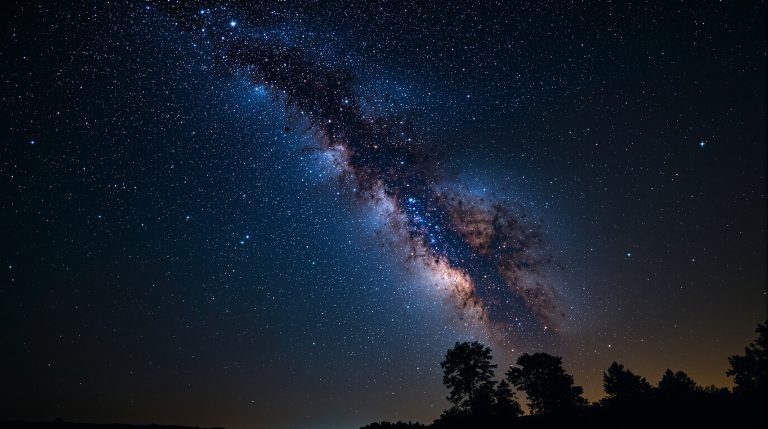
You’ve probably looked up at the night sky and wondered what’s really out there. Maybe you’ve squinted at the moon, trying to make out its craters, or searched for Mars among the twinkling dots above. Without a telescope, that’s about as far as you’ll get. But the moment you peer through one of these incredible instruments, everything changes. The universe literally opens up.
Why is the Telescope Important: Understanding Our Window to the Cosmos
The telescope isn’t just another scientific tool sitting in an observatory. It’s the reason we know what we know about our place in the universe. Think about it: every major astronomical discovery that’s shaped our understanding of reality happened because someone pointed a telescope skyward and saw something no one had seen before.
Without telescopes, we’d still think Earth was the center of everything. We wouldn’t know about other galaxies, black holes, or that the universe is expanding. We’d be astronomically ignorant in the most literal sense possible.
The Game-Changing Impact on Human Knowledge
When Galileo turned his primitive telescope toward Jupiter in 1610, he spotted four moons orbiting the planet. This simple observation shattered the prevailing belief that everything in the cosmos revolved around Earth. That moment fundamentally changed how we see ourselves in the universe. Not bad for a device that magnified objects only about 20 times, right?
Today’s telescopes are powerhouses compared to Galileo’s modest instrument. The Hubble Space Telescope orbits Earth at 547 kilometers above the surface, capturing images of galaxies billions of light-years away. It’s shown us that the universe contains roughly two trillion galaxies, each with hundreds of billions of stars. The numbers are mind-boggling, but they’re real, verified observations made possible by telescope technology.
Consider this: in 2019, the Event Horizon Telescope actually photographed a black hole’s shadow in the galaxy M87, located 55 million light-years from Earth. This wasn’t science fiction or an artist’s rendering. It was an actual image of something so dense that not even light escapes its gravitational pull. The telescope made the invisible visible.
How Telescopes Drive Scientific Discovery
Telescopes have become our time machines. When you look through a telescope at a distant star, you’re literally seeing into the past. The light from that star took years, centuries, or even millennia to reach your eye. The James Webb Space Telescope, launched in 2021, can detect infrared light from objects so distant that we’re seeing them as they appeared just a few hundred million years after the Big Bang.
This isn’t just academic navel-gazing. Understanding the universe’s origins helps us answer fundamental questions about how galaxies, stars, and planets form. It tells us whether Earth-like worlds exist elsewhere, and whether we’re alone in this vast cosmic arena.
Here’s something most people don’t realize: telescopes operating in different wavelengths reveal completely different universes. Radio telescopes detect waves we can’t see or hear, uncovering phenomena like pulsars, which are rapidly spinning neutron stars that emit beams of radiation. X-ray telescopes spot the violent, high-energy processes around black holes and exploding stars. Each type of telescope adds another layer to our understanding, like different instruments in an orchestra creating a complete symphony.
Spotting Threats and Opportunities
Telescopes serve a very practical purpose beyond pure science: they help protect Earth. Astronomers use telescopes to track near-Earth objects like asteroids and comets that might pose collision risks. Remember the asteroid that wiped out the dinosaurs? We’d prefer not to repeat that experience.
Organizations worldwide use telescopes to catalog and monitor these space rocks. The Pan-STARRS telescope in Hawaii, for instance, has discovered thousands of potentially hazardous asteroids. Early detection gives us time to potentially deflect a threatening object, as NASA demonstrated with its DART mission in 2022 when it successfully altered an asteroid’s orbit.
Why Telescopes Matter for Everyday Life
You might be thinking, “That’s all fascinating, but how does this affect me?” Fair question. The importance of telescopes extends far beyond astronomy labs and research papers.
The technology developed for telescopes has spun off into countless applications we use daily. The digital camera sensor in your smartphone? That technology evolved from light-sensing devices created for space telescopes. Medical imaging techniques, including certain types of X-rays and MRI improvements, borrowed concepts from astronomical imaging technology.
Weather satellites that predict storms and help farmers plan their harvests rely on telescope-derived technology. GPS systems that guide you to that new restaurant use principles refined through precise astronomical measurements. The telescope’s influence touches your life in ways you’ve probably never considered.
Inspiring Future Generations
There’s something profoundly moving about looking through a telescope for the first time and seeing Saturn’s rings with your own eyes. That moment transforms abstract concepts from textbooks into tangible reality. It sparks curiosity and wonder in ways few other experiences can match.
Countless scientists, engineers, and innovators trace their career choices back to that first telescopic view. The telescope serves as a gateway drug to science, if you will, hooking young minds on the thrill of discovery. We need those inspired minds to solve tomorrow’s challenges, whether they end up in astronomy, medicine, engineering, or any field requiring creative problem-solving.
Expanding Our Search for Life Beyond Earth
Perhaps the telescope’s most exciting role involves answering humanity’s oldest question: Are we alone? Modern telescopes can analyze the atmospheres of exoplanets, worlds orbiting distant stars, searching for biosignatures like oxygen, methane, and water vapor that might indicate life.
Since the first confirmed exoplanet discovery in 1995, telescopes have revealed over 5,000 planets beyond our solar system. Some orbit in the “Goldilocks zone” where temperatures allow liquid water to exist on their surfaces. The James Webb Space Telescope can detect chemical compositions of these distant atmospheres, potentially revealing whether biological processes are at work.
Finding even microbial life on another world would fundamentally alter our understanding of life’s prevalence in the universe. It would suggest that life isn’t a cosmic fluke but perhaps an inevitable consequence of the right conditions. That discovery would rank among the most important in human history, and it will almost certainly come through a telescope.
The Economic and Strategic Importance
Countries invest billions in telescope technology because knowledge equals power. Understanding space weather, for instance, protects satellites, power grids, and communication systems from solar flares and coronal mass ejections. A severe solar storm could cause trillions of dollars in damage to our technology-dependent civilization.
Space-based telescopes monitor Earth’s climate, tracking deforestation, ice sheet melting, and ocean temperatures with precision impossible from ground level. This data informs policy decisions affecting billions of people. The telescope has become an essential tool for planetary stewardship.
Commercial space ventures increasingly rely on telescopic observations for everything from satellite placement to asteroid mining plans. The economic opportunities in space depend on our ability to see and understand what’s out there clearly.
Looking Forward: The Next Generation
The future of telescope technology promises even more revolutionary discoveries. The Extremely Large Telescope being built in Chile will have a primary mirror 39 meters across, gathering 15 times more light than any current optical telescope. It will directly image Earth-sized exoplanets and study the universe’s earliest galaxies with unprecedented clarity.
Radio telescope arrays like the Square Kilometre Array will scan vast swaths of sky simultaneously, potentially detecting signals from extraterrestrial civilizations if they exist. These next-generation instruments will answer questions we haven’t even thought to ask yet.
Adaptive optics technology now corrects for atmospheric distortion in real-time, allowing ground-based telescopes to achieve clarity once possible only from space. Machine learning algorithms sift through massive datasets from telescopic surveys, identifying patterns and anomalies human researchers might miss. The telescope keeps evolving, becoming more powerful and sophisticated each year.
The Philosophical Weight of Looking Up
Beyond the practical applications and scientific discoveries, telescopes matter because they humble us. They remind us that Earth is a tiny, fragile oasis in an incomprehensibly vast universe. That perspective shift is perhaps the telescope’s most important contribution.
When astronauts see Earth from space, many describe a profound cognitive shift called the “overview effect,” where petty human divisions seem absurd against the backdrop of cosmic infinity. Telescopes give us a version of that perspective without leaving the ground. They show us we’re all passengers on the same small world, united by our shared curiosity about what lies beyond.
The telescope also represents humanity at its best: our drive to understand, to question, to reach beyond our immediate needs and explore for the sheer joy of discovery. In an age sometimes dominated by short-term thinking, the telescope embodies long-term vision, literally and figuratively.
So why is the telescope important? Because it transformed us from ground-dwelling creatures staring up in confusion to informed cosmic citizens understanding our place in space and time. It protects us from threats, spins off technologies that improve daily life, and might eventually answer whether we’re alone. Most importantly, it reminds us that there’s always more to discover, more to learn, and more to wonder about. That sense of possibility, that invitation to curiosity, might be the telescope’s greatest gift to humanity.