5 Best Astrophotography Filters in 2025
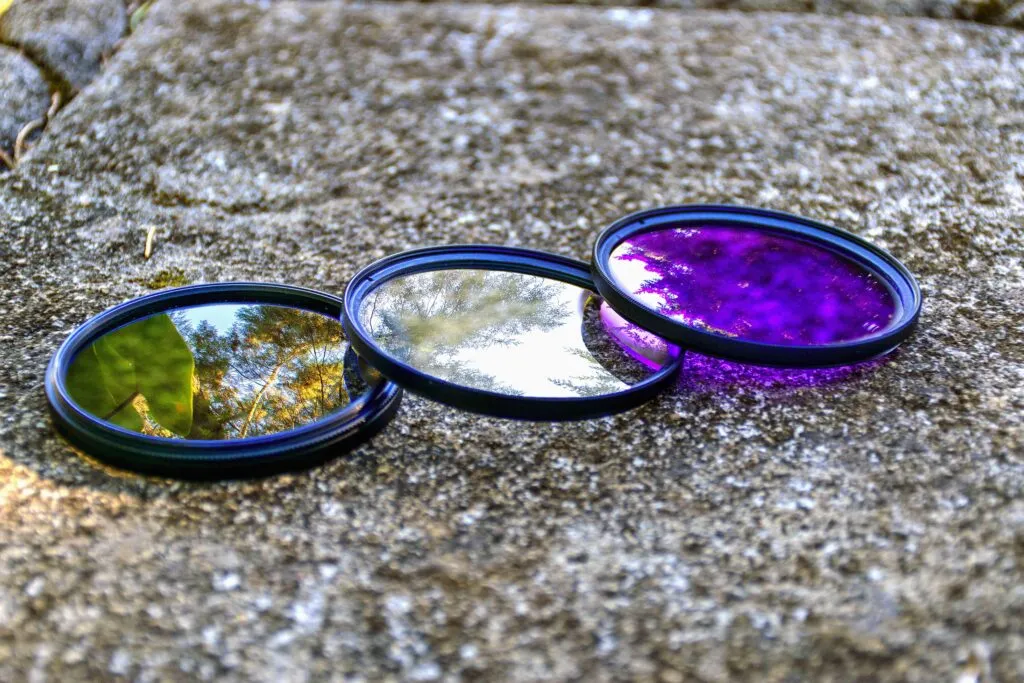
Astrophotography filters act like fine tuners for your cosmic canvas, shaping the way light reaches your camera. The right one can cut through city glow, sharpen contrast, and bring out the hidden colors of distant nebulae. From taming light pollution to amplifying the reds and blues in deep sky objects, filters like the SVBONY SV220 and SV260 let you capture star fields and nebulas with a richness and clarity that the naked eye could only dream of.
For sharp planetary images, the 1. 25-inch UV IR Cut Block Filter is ideal. K&F Concept’s Natural Night Filter reduces city light interference without altering colors. These filters ensure clear, detailed images of the night sky. Whether you’re capturing galaxies or shooting stars, the right filter makes a difference. Explore these options to elevate your astrophotography experience.
1. Svbony Sv220 Telescope Filter

The SVBONY SV220 Telescope Filter is perfect for amateur astronomers and astrophotography enthusiasts looking to enhance their night sky images. It is designed for individuals who use one-shot color cameras and need a solution to reduce light pollution for clearer and more vibrant celestial photography.
Pros:
- Dual-band filter enhances H-Alpha and O-III wavelengths.
- Significantly reduces light pollution, improving image clarity.
- Compatible with a wide range of telescopes and cameras.
- Easy to use with standard 2-inch fitting.
Cons:
- May require additional adapters for certain telescope models.
- Limited to astrophotography applications; not suitable for terrestrial use.
The SVBONY SV220 Telescope Filter features dual-band technology that targets specific H-Alpha and O-III wavelengths, making it ideal for capturing the intricate details of nebulae and other celestial phenomena. This filter’s narrowband capabilities allow astrophotographers to isolate these important wavelengths, resulting in images with greater contrast and definition. As a result, users can achieve stunning photos that highlight the beauty of the night sky with enhanced vibrancy and reduced noise.
Moreover, the filter’s ability to reduce light pollution is particularly beneficial for those in urban areas where ambient light often interferes with stargazing and astrophotography. By minimizing the impact of artificial light, the SVBONY SV220 allows for clearer observation and documentation of celestial bodies. Its standard 2-inch design ensures compatibility with a wide range of telescopes and cameras, making it a versatile addition to any astronomer’s toolkit. This ease of use, coupled with its impressive filtering capabilities, makes it a valuable asset for anyone looking to enhance their astrophotography experience.
2. Svbony Telescope Filter 1.25 Inches Uhc Filter
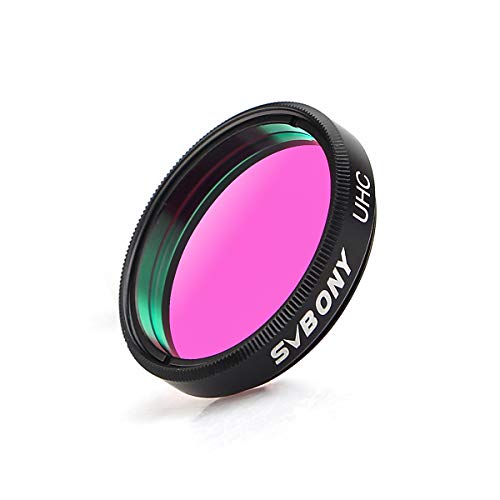
The SVBONY Telescope Filter 1.25 inches UHC Filter is ideal for amateur astronomers and astrophotographers who want to enhance their viewing experience. This filter is perfect for those interested in reducing light pollution and improving image contrast during their stargazing sessions. If you’re looking to capture clearer images of celestial bodies, this filter is an excellent addition to your equipment.
Pros:
- Improves image contrast significantly
- Reduces light pollution, making celestial observations clearer
- Compact and lightweight design
- Compatible with 1.25-inch telescope eyepieces
Cons:
- May not fit larger diameter telescopes
- Limited use in heavily polluted urban areas
The SVBONY Telescope Filter enhances your viewing experience by improving the image contrast. By filtering out unwanted wavelengths, it allows for better observation of deep-sky objects such as nebulae and galaxies. This feature is particularly beneficial for astrophotographers looking to capture detailed images without the interference of artificial lights.
Another advantage of this UHC Filter is its ability to reduce light pollution. Whether you’re observing from a suburban backyard or a rural area, this filter helps in minimizing the effects of ambient light, thus making faint celestial objects more visible. Its compact design ensures easy portability and compatibility with most 1.25-inch eyepieces, making it a versatile addition to any astronomer’s toolkit.
3. Svbony Sv260 Telescope Filter
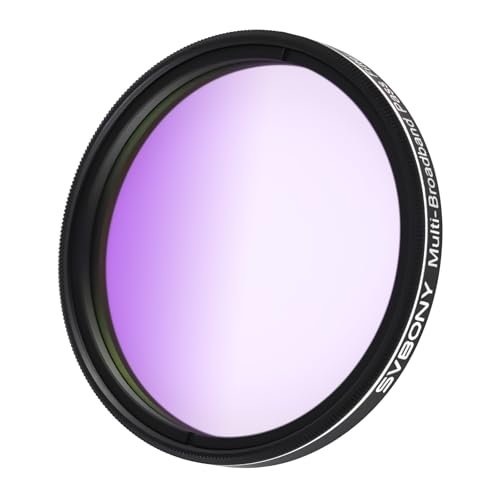
The SVBONY SV260 Telescope Filter is ideal for amateur astronomers and astrophotography enthusiasts looking to enhance their star field imagery. This filter is particularly suited for individuals residing in suburban areas affected by light pollution, who want to capture clearer images of nebulae and galaxies.
Pros:
- 90% Light Transmittance ensures bright and vivid images.
- Multi-bandpass technology enhances emission and reflection nebulae photography.
- OD4 Cut-Off Depth helps in reducing light pollution effectively.
- Compact design makes it easy to handle and install.
Cons:
- May not perform optimally in extremely light-polluted urban areas.
- Requires compatibility check with specific telescope models.
The SVBONY SV260 Telescope Filter boasts 90% light transmittance, making it a powerful tool for capturing bright and vivid images of the night sky. This feature is particularly beneficial for astrophotographers who wish to highlight the intricate details of emission and reflection nebulae without losing image quality due to light interference.
With its multi-bandpass technology, this filter is designed to enhance the visual experience and photographic results of nebulae and galaxies. The OD4 cut-off depth effectively minimizes the effects of light pollution, allowing users to achieve clearer and more detailed images even in areas with moderate light pollution. The compact design further adds to its appeal, offering easy handling and installation, making it a convenient addition to any astrophotography setup.
4. Svbony Telescope Filter

The SVBONY Telescope Filter, 1.25 inches UV IR Cut Block Filter is perfect for amateur astronomers and astrophotographers looking to enhance their planetary imaging. If you are someone who is passionate about capturing the intricate details of planets and want to improve the clarity of your astrophotography, this filter is an ideal addition to your equipment. It is designed to keep your planetary images sharp and free from unwanted infrared interference.
Pros:
- Multi Coated for improved image quality.
- UV IR Cut Block feature keeps images free from unwanted interference.
- Compact size makes it easy to handle and store.
Cons:
- May require additional adapters for certain telescopes.
- Not suitable for non-CCD cameras.
The SVBONY Telescope Filter is crafted with precision to provide users with enhanced visual clarity. The multi-coated feature ensures that light transmission is optimal, reducing glare and improving overall image quality. This is particularly beneficial for those aiming to capture detailed planetary images, as it allows for a sharper view free from distortions.
Another standout feature is the UV IR Cut Block capability, which effectively eliminates infrared interference, a common issue in astrophotography that can blur details. By blocking these unwanted wavelengths, users can achieve clearer and more accurate representations of celestial bodies, enhancing the overall astrophotography experience. Compact and efficient, this filter is a valuable tool for any serious astrophotographer.
5. K&f Concept 67mm Clear Natural Night Filter

The K&F Concept 67mm Clear Natural Night Filter is perfect for photographers and astrophotography enthusiasts who want to enhance their night sky shots without compromising on color integrity. This filter is ideal for anyone looking to capture cityscapes and starry skies with reduced light pollution. Whether you are a professional photographer or a hobbyist aiming to improve your night photography, this filter can significantly enhance your images.
Pros:
- Reduces light pollution, allowing for clearer night sky shots.
- No color cast, maintaining natural colors in your photographs.
- 28 multi-layer coatings ensure durability and high performance.
- Compatible with various camera lenses due to its 67mm size.
Cons:
- May require additional adapters for some camera models.
- Initial cost might be high for amateur photographers.
The K&F Concept Natural Night Filter boasts 28 multi-layer coatings that are designed to reduce unwanted reflections and enhance image clarity. This feature is particularly beneficial for night photographers who struggle with glare and reflections from artificial lights in urban settings. The filter’s ability to minimize light pollution ensures that stars and celestial objects appear crisp and clear, making your night shots more vibrant and detailed.
Another standout feature of this filter is its no color cast capability, which ensures that your photos maintain their true colors. This is a crucial benefit for photographers who want to preserve the natural hues in their night shots without the need for extensive post-processing. The filter’s nano-X series construction promises durability and longevity, making it a worthwhile investment for anyone serious about night photography.
Frequently Asked Questions
What Are Astrophotography Filters Used For?
Astrophotography filters enhance celestial images by reducing light pollution and increasing contrast. They isolate specific wavelengths, improving visibility of nebulae, galaxies, and stars. These filters are essential for capturing detailed and vibrant night sky photos. They allow photographers to highlight specific astronomical features, making them invaluable for both amateur and professional astrophotographers.
How Do Narrowband Filters Work?
Narrowband filters isolate specific wavelengths of light, such as H-Alpha and O-III. This enhances the contrast of nebulae and other celestial objects. By blocking out unwanted wavelengths and light pollution, they provide clearer and more detailed astrophotography images. These filters are ideal for capturing faint astronomical features.
Why Use A Light Pollution Filter?
Light pollution filters reduce unwanted artificial light, enhancing the visibility of celestial objects. They improve the contrast and clarity of astrophotography images. By filtering out specific wavelengths of urban lights, these filters help capture more natural night sky colors. They are essential for astrophotography in urban or suburban areas.
What Is A Uv Ir Cut Block Filter?
A UV IR cut block filter eliminates ultraviolet and infrared light, which can blur images. It ensures sharper planetary and lunar photos by blocking unwanted wavelengths. This filter is especially useful for CCD digital astrophotography. It helps maintain accurate color representation and prevents image distortion from infrared interference.
Do Filters Affect Color Accuracy In Photos?
Quality filters, like multi-coated options, ensure minimal impact on color accuracy. They reduce unwanted wavelengths while preserving natural colors. Advanced coatings prevent color cast, maintaining true-to-life celestial images. This ensures that night sky photos remain vibrant and realistic, reflecting the true beauty of astronomical objects without unwanted color shifts.
Conclusion
Choosing the right astrophotography filter can greatly enhance your celestial images. Each filter serves a specific purpose and caters to different needs. The svbony sv220 offers dual-band capabilities, reducing light pollution effectively. For those seeking to improve image contrast, the 1.
25-inch uhc filter is a solid choice. The sv260 provides excellent light transmittance, making it suitable for capturing nebulae and galaxies. For sharp planetary images, the 1. 25-inch uv ir cut filter is a reliable option. Lastly, the k&f concept 67mm filter is perfect for night city sky shots, reducing light pollution without color distortion.
Selecting the right filter depends on your camera type and specific photography interests. Whether you are capturing nebulae, galaxies, or city skies, these filters can help achieve stunning results. Explore your options and discover the ideal filter for your astrophotography adventures.
Happy stargazing and photographing!